Summer 2026 Premier Firearms & Militaria Auction
August 6th, 7th, 8th, & 9th, 2026
This auction will feature an outstanding collection of items spanning multiple categories including Modern, Military, Sporting, & Antique firearms & militaria! Below is just a small grouping of select highlights from the massive offering to be featured in this upcoming sale!
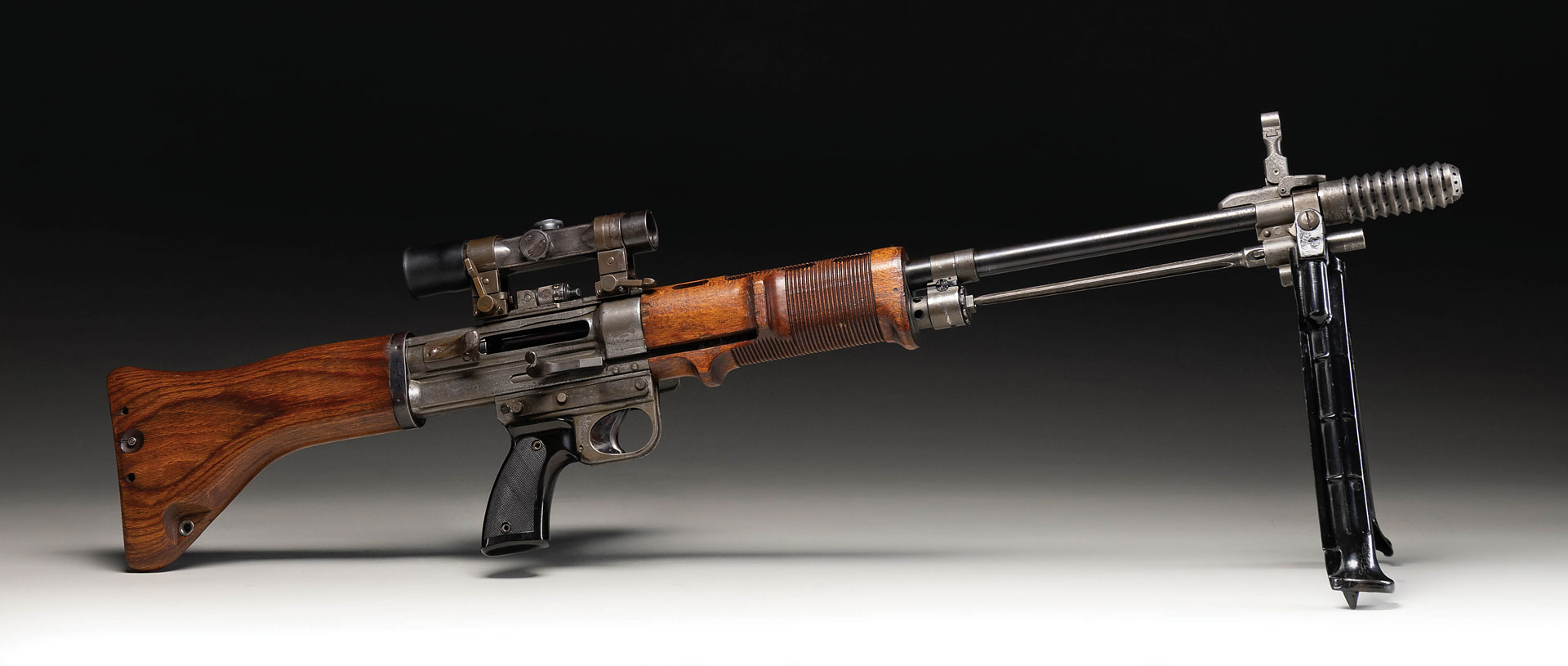
INCREDIBLY RARE & COMPLETE, FULLY TRANSFERABLE HEINRICH KRIEGHOFF GERMAN SECOND MODEL FG42 WITH CORRECT SCOPE & BAYONET
03-2015 | Cal. 7.92 (8MM).| S# 04911. | Bbl. 20”. |
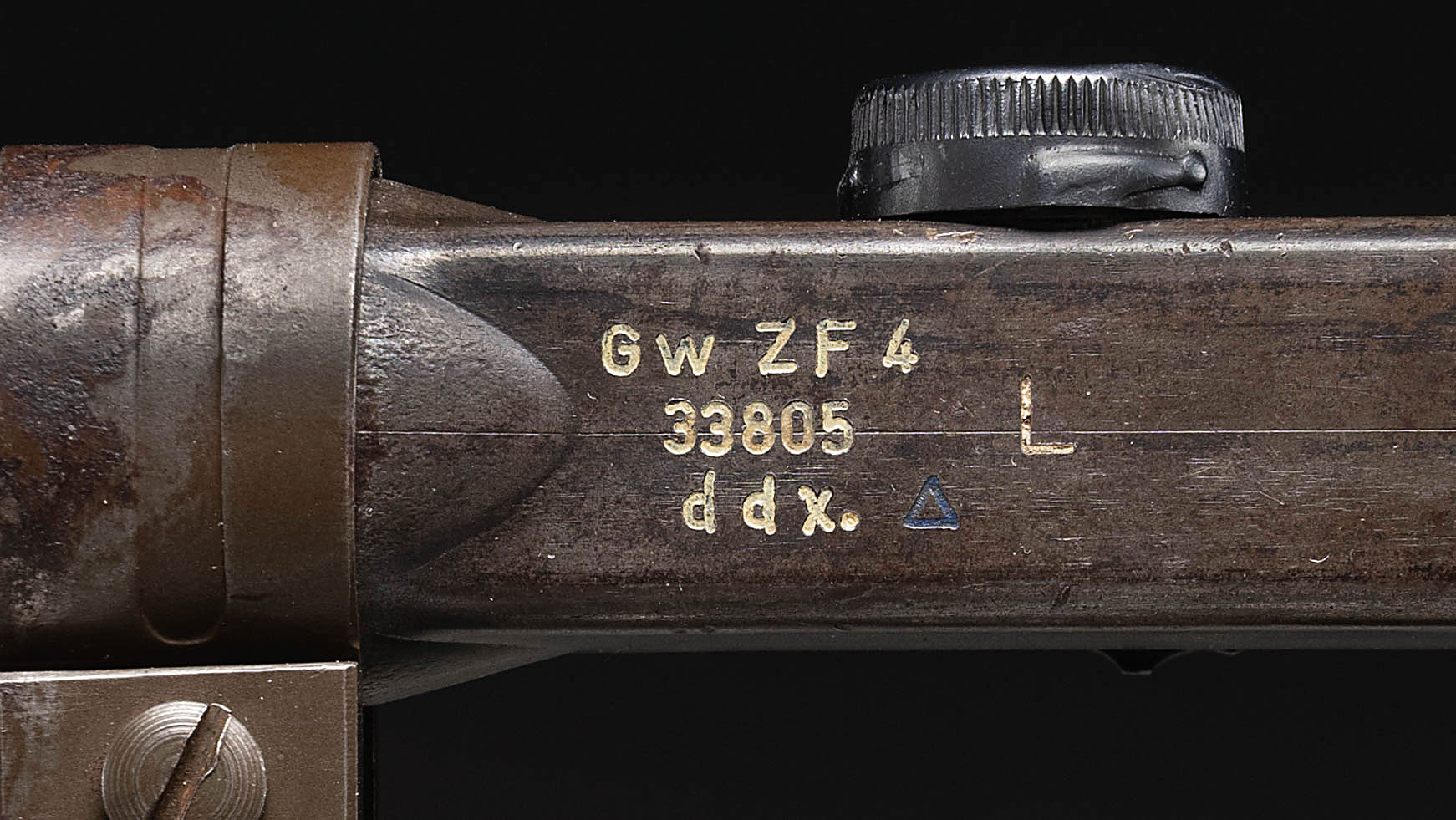
Manufactured by Heinrich Krieghoff. A real unicorn of the collectable NFA firearms world, there are very few military arms that garner the interest of the German FG42 (Fallschirmjagergewehr 42) Paratroop Rifle. It was designed during WWII to function much in the same capacity as the US BAR. It was more portable than the crew served heavy machine guns, while being chambered in the same round, which performed terrific and was already in great supply in the government inventory. It was believed to have been fielded by the German Luftwaffe in the rescue of Mussolini and is a direct decedent of the wildly popular class of modern Assault Rifles. Although it may not have been optimal in every area, it could perform tasks previously reserved for specific systems such as the submachine gun, heavy machine guns and even rifles. The FG42 was developed by Rheinmettal-Borsig for the German Airforce (Luftwaffe) and utilized an ingenious fire control mechanism where it fired from a closed bolt for accurate semiautomatic fire and fired from an open bolt while fully automatic is selected to run cooler, and help to avoid cookoffs under heavy fire. That was accomplished by use of a swivel mounted sear which was moved left or right to engage the proper sear notch for the preferred function. The bolt design was heavily influenced by the Lewis Gun and lived on for many more years where its similarities were shared in the US M60 machine gun. The FG42 is gas operated & the reciprocating charging handle is affixed to the piston on the right side of the rifle. It used the now common strait line stock configuration where the recoil system continued into the sliding, detachable shoulder stock. The barrel is terminated w/ a course thread that hosts a unique & effective muzzle brake consisting of 10 fins & 103 ports. The ports were staggered, each fin hosting 11 ports & 10 ports w/ the final fin holding 8. The brake measures 3.53” in length and is secured w/ a spring loaded arm on top of the barrel, forward of the front sight assembly. Mounted to the rear of the muzzle brake below the barrel is a stamped, folding bipod that folds rearward, completely encompassing the unique spike bayonet, which carried facing rearward when not in use, with its tip captured and protected by the forward section of the gas system. The bayonet measures approximately 10.5” and is retained by a spring-loaded locking mechanism. It has 4 deep grooves and a very pointed tip. The front sight measures 2.00” in length when unfolded for use and consists of a hooded post. The rear sight is a folding, spring loaded peep sight, adjustable from 100 meters to 1200 meters and is adjusted by depressing it and turning a barrel below the aperture. It measures approximately 2.25” when presented for use and fully extended. The magazine holds 20rds. & presents from the left side of the receiver. In typical German fashion, even the magazine well is over engineered, boasting 2 dust covers, one on the top and another on the bottom of the feed section. They are spring loaded and disengage w/ a press of single button. The ejection port is on the right, directly above the pistol grip. The brass deflector at the rear of the port consists of a bent & riveted metal piece. Fire controls are on the left side, above the pistol grip, both the safety & selector. The stock & forend are hardwood, while the pistol grip is a very dark brown bakelite in a much more traditional angle compared to the first model which had a sharp angle, facing rearward. Visible markings include; (on top of receiver) Krieghoff proof marks above “FZS” (Heinrich Krieghoff factory code) “FG 42 / 04911”. Left side of trigger has Krieghoff parts qualification proof code. Left side of trigger group marked “E – D” to switch function from semiautomatic, closed bolt operation to open bolt fully automatic operation. The translation is “Einzelfeuer” Semiautomatic & “Dauerfeuer” Fully Automatic). Shoulder stock marked “4911” matching the receiver number. Several small parts, such as sights, muzzle brake retaining lever, misc pins, etc contain small stampings of “1” or “2”. Several other areas such as trigger group & bolt include the “FZS” Heinrich Krieghoff factory code. Bolt also numbered 4911X, matching receiver number. The FG42 was designed in a few different configurations, this being the second model. These guns were extremely time consuming and expensive to produce and therefore not given a high priority to continue manufacture, and combined w/ the declining priority given the paratroop division of the Luftwaffe, it quickly faded away in favor of other weapon systems. This rifle is currently sporting the incredibly rare Voigtlander ZF4 scope #33805 w/ “L” marking, indicating it was specifically manufactured for the FG-42. MAGS: 1 steel 20rd w/ Krieghoff Eagle/2″ acceptance proof on front locking lug & left side of body. NATIONAL FIREARMS ACT MG REQUIRING BATF TRANSFER BEFORE TAKING POSSESSION. FULLY TRANSFERABLE. PROVENANCE: Military Museum Collection of Shooters Outpost, Hooksett NH. STATUS: CURIO CLASS III